CONSUELO RUYBAL
CREATIVE DIRECTOR, INTERACTIVE STRATEGY


 NAVIGATE (6) SAMPLES
BING/JAY-Z DECODED
CLIENT: droga5 for Jay-Z
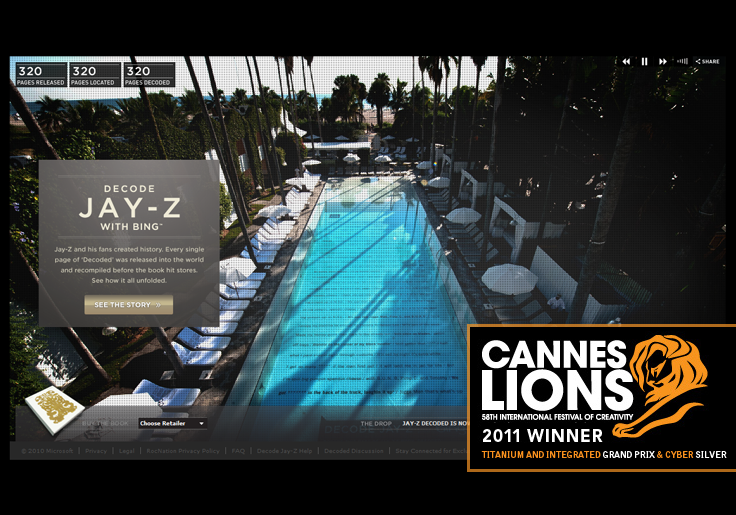
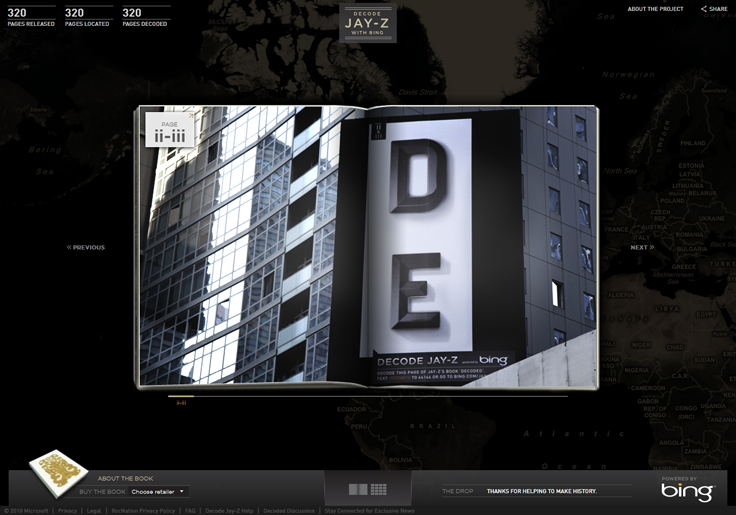
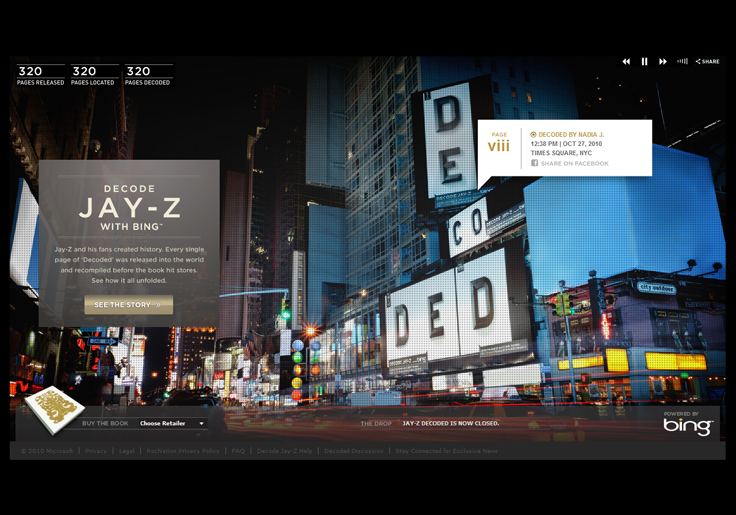
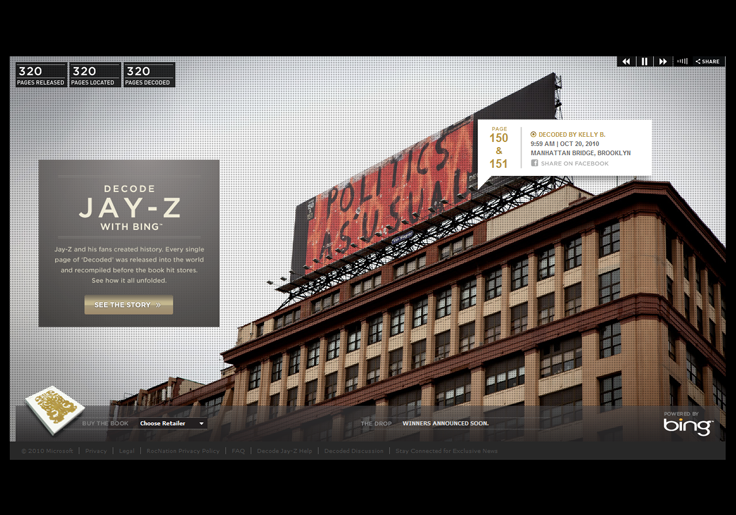
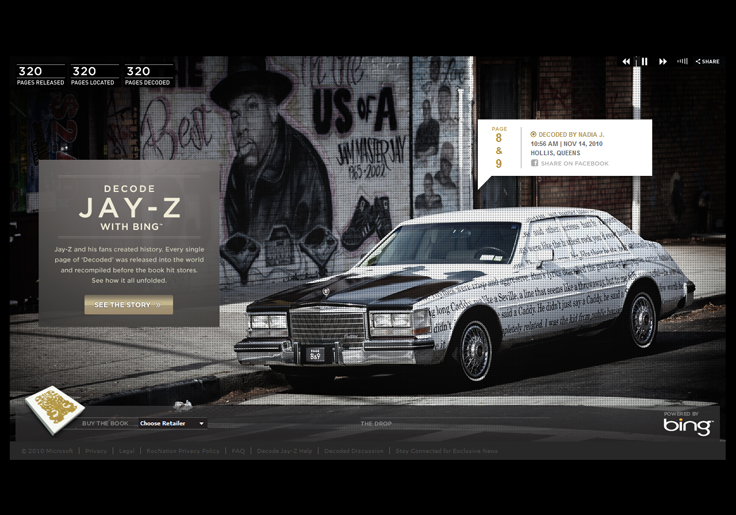
Jay-Z and his fans made history. In the four weeks leading up to the book's release, every single page of Jay'Z's first book, 'Decoded' was placed out in world in locations relating to their content. Pages appeared everywhere from billboards and bus shelters to swimming pools and pool tables; from Gucci jackets to burger wrappers and bronze plaques to Cadillac's. Fans found the over 300 pages on Bing Search and recompiled the book online before it hit the stores.
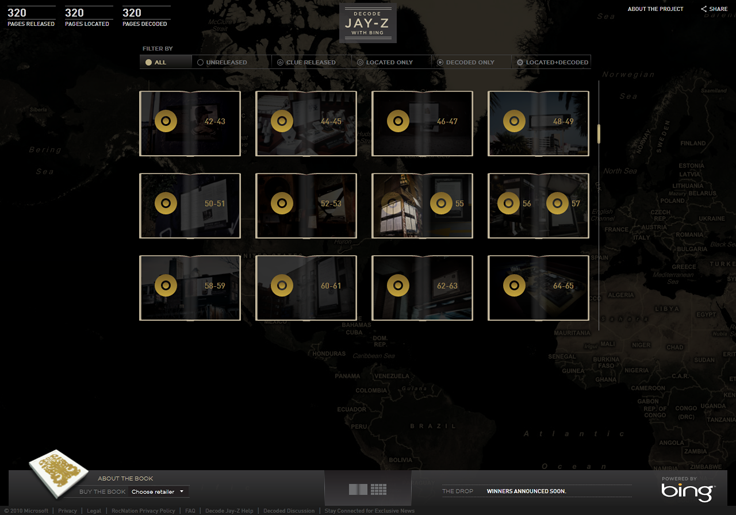
My role in this ground breaking campaign was to design the conceptual model, game logic and user experience for bing.com/jay-z. Each day several pages of the book were released (the book is 320 pages, the campaign was 4 weeks long.) Bing maps and bing search were used as the game platform. Two clues were written for each page. The answers to these clues were always geographic in nature; inputting your answers into the custom 'Decoded' bing map would get you closer to the location of a page. Once you located a page, a beacon would appear, marking the location of the page and whether or not you were the first to find it. The campaign was covered in New York Magazine, Mashable, Creativity,

 NAVIGATE (6) SAMPLES
American Express
Key Results: 400% increase in prospect conversions, 85% increase in cardmember conversions and by the 3rd generation launch, +60% increase in cards acquired online.
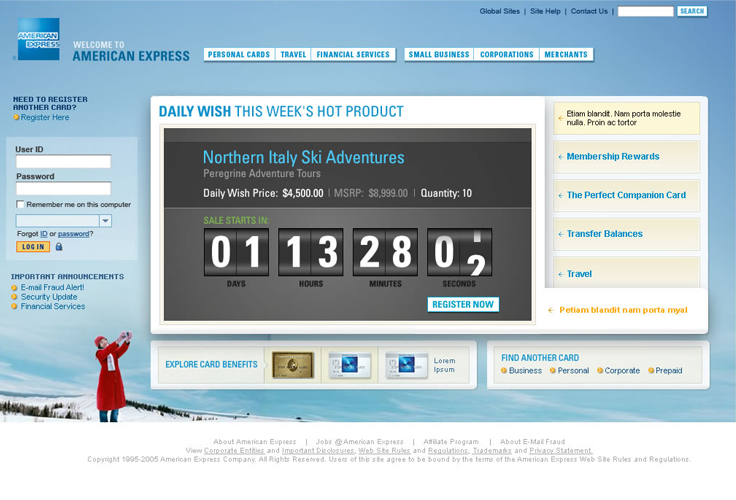
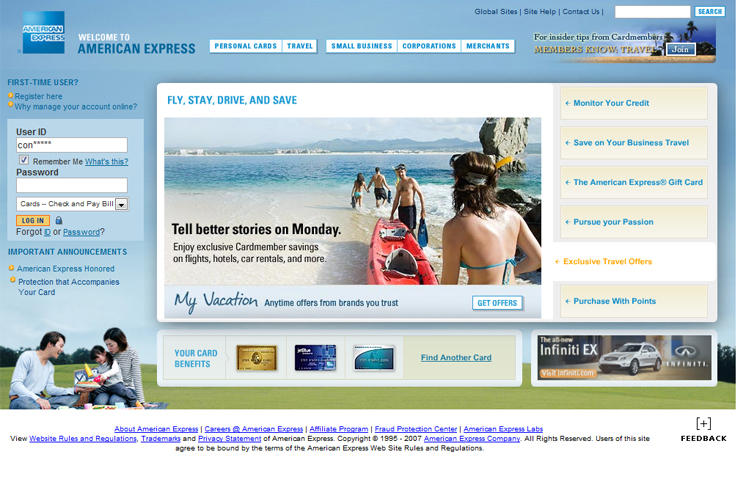
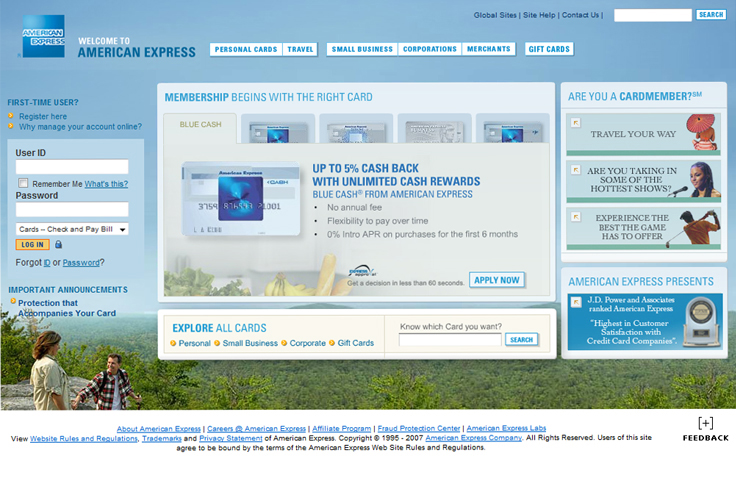
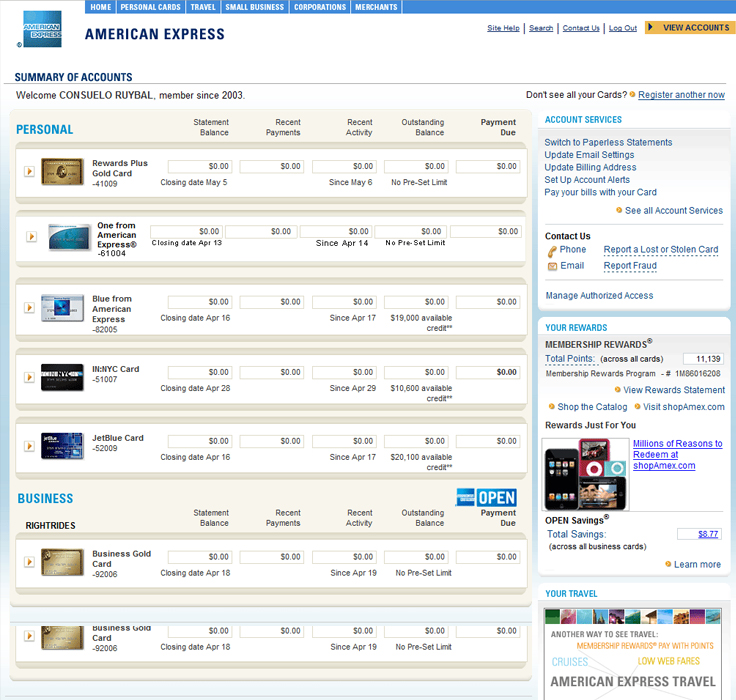
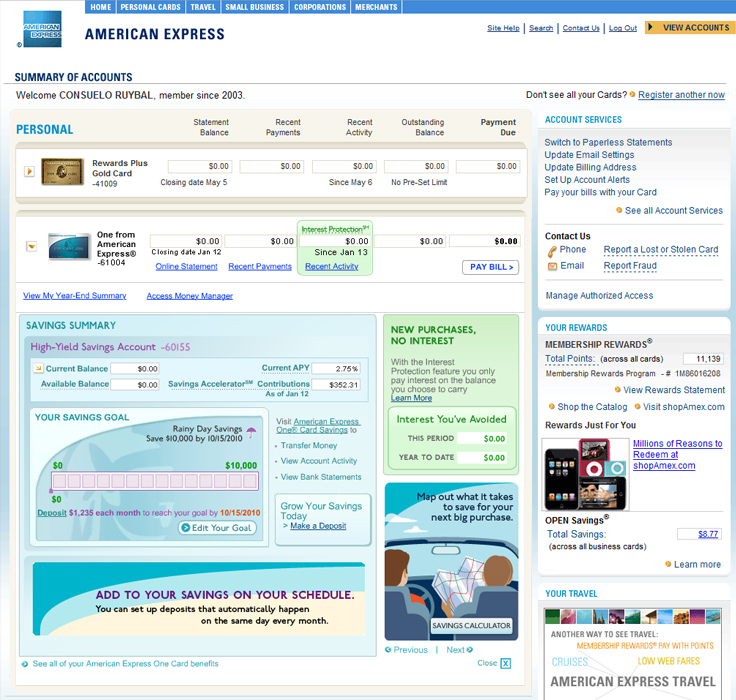
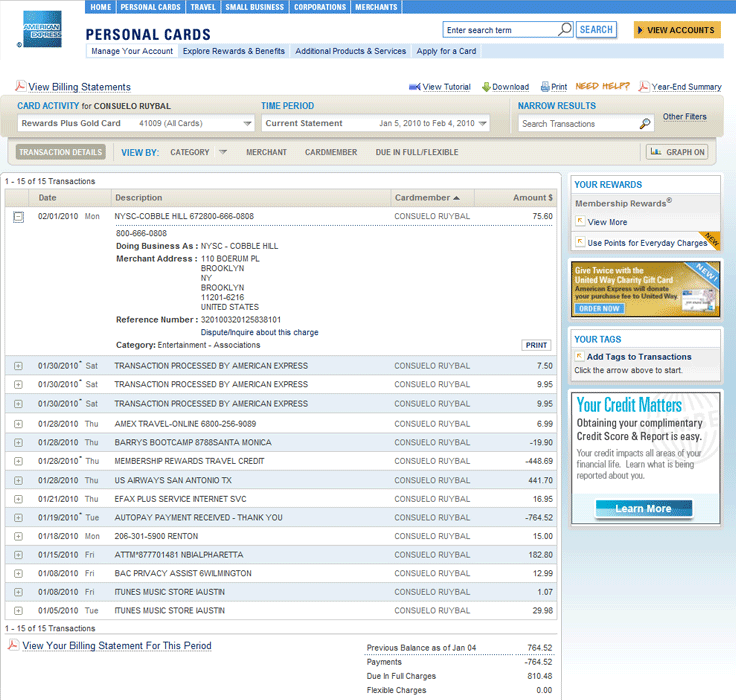
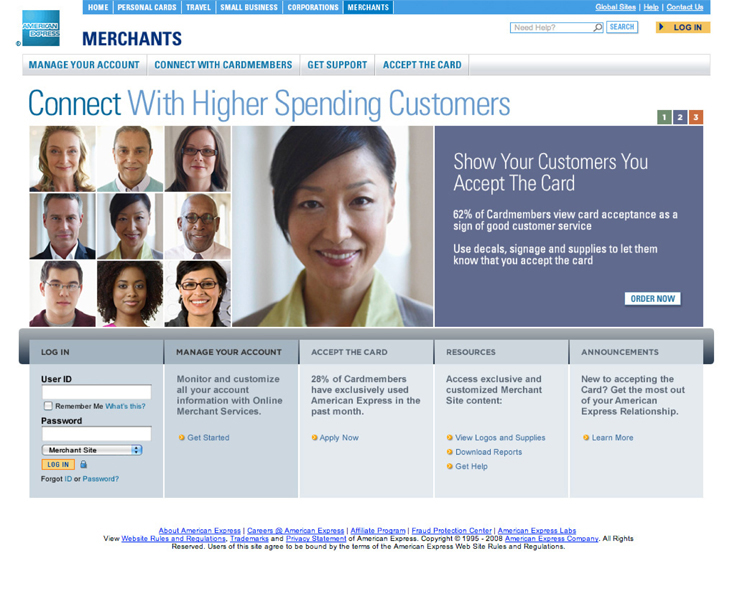
When I started working on the American Express website in 1999 it was a collection of business unit microsites, independently branded and loosely held together by a global navigation. Nearly all the content was duplicated art and copy taken directly from brochures and take-ones. At the time, file-size limits, page weight restrictions and security concerns kept the site from being relevant or useful to cardholders. It took six years of client relationship building to change policies, loosen technology restrictions and bring the site together under a cohesive visual design. In 2005 when I took over as Creative Director, we used traffic and spend data to show where we should focus and strengthen the intent of the site; customer service...
(READ MORE)
...This research and analysis showed that AXP's best customers had online accounts and they checked and managed those accounts regularly. Understanding the causal relationship, we worked to redesign messaging, marketing and the site to encourage online registration. With a user-centered approach we redesigned and optimized the most important touch-points on the site: the home page, the entire account management section of the site and the card acquisition and application area. This has led to huge cost savings and increasing cardmember spend and tenure. After the redesign we saw a 400% increase in prospect conversions, 85% increase in cardmember conversions and by the 3rd generation launch +60% increase in cards acquired online.
 NAVIGATE (8) SAMPLES
American Express Network
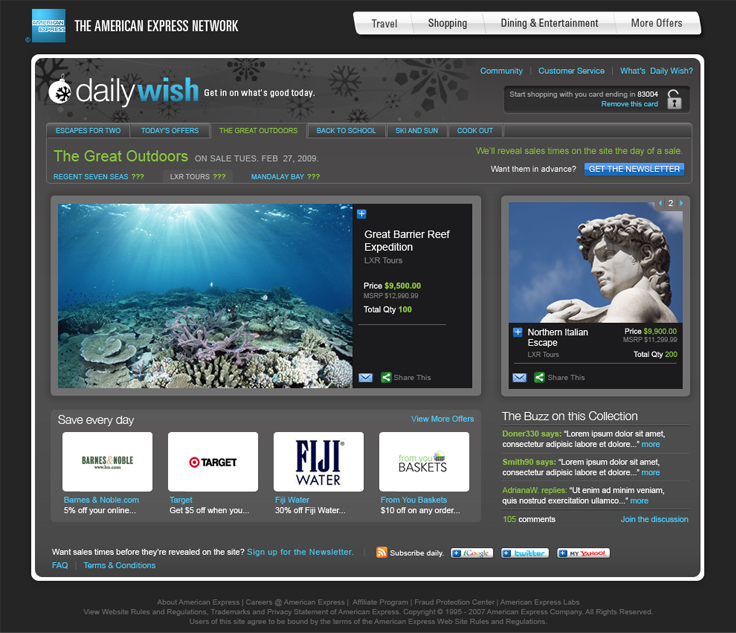
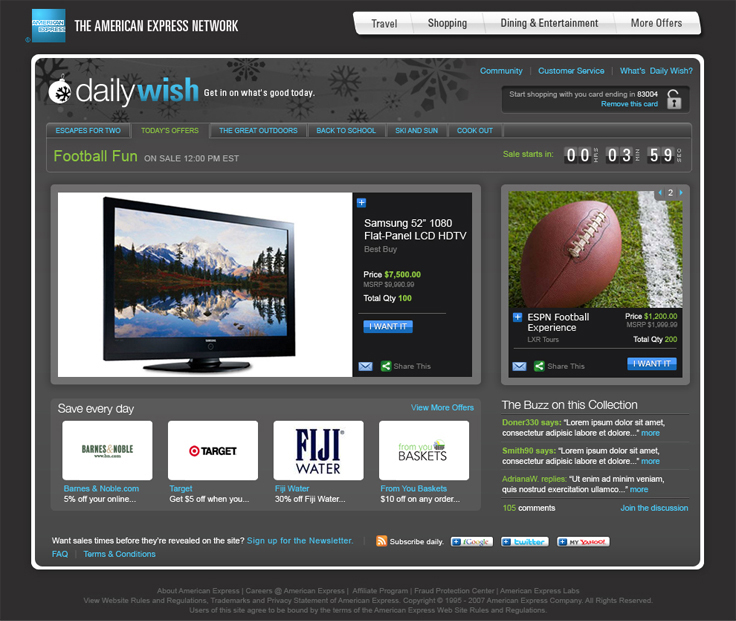
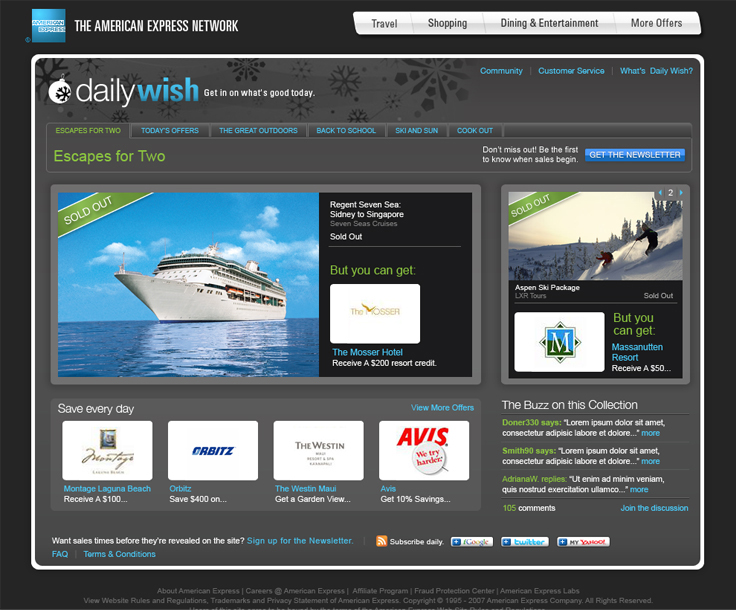
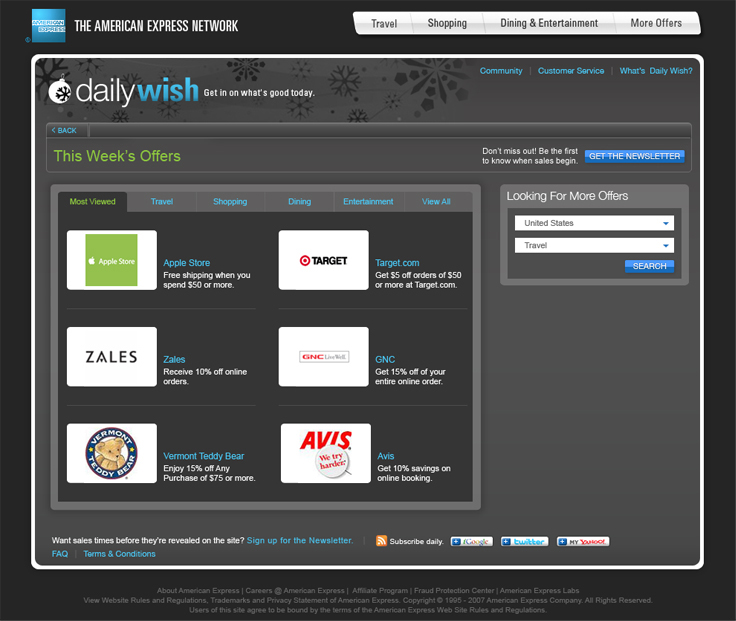
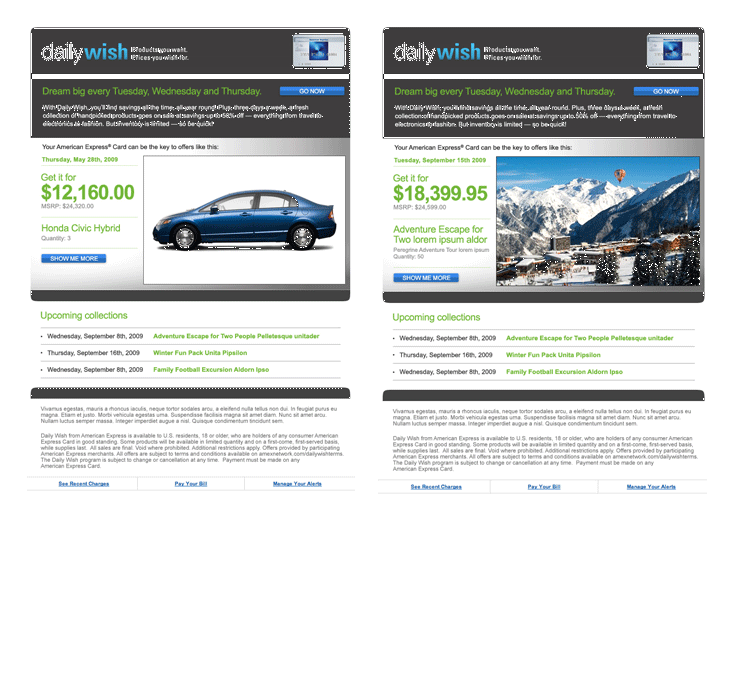
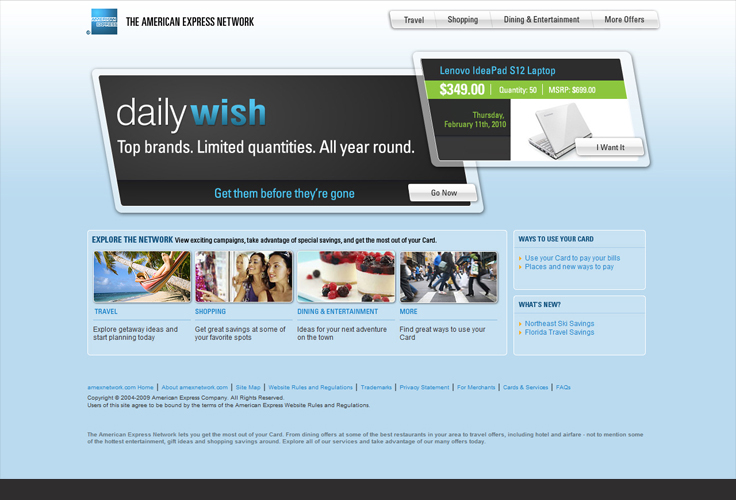
I took over the creative leadership of the $26M Amexnetwork business in 2008. My role was to lead business development as well as multi-channel communications for both consumers and businesses. Business development can mean pitching new business to new or existing clients, but for this particular client it meant proposing new online business strategies. Two of many successful ventures that I led were Dailywish and OnTheCard. Dailywish is an online retail business that sells products and experiences at deeply discounted prices to card holders. It generates a profit from ad revenue and gives AXP merchant partners exposure to consumers who tend to spend more. These products go on sale three times a day, the sales times are published the day of the sale to generate a sense of urgency and competition...
(READ MORE)
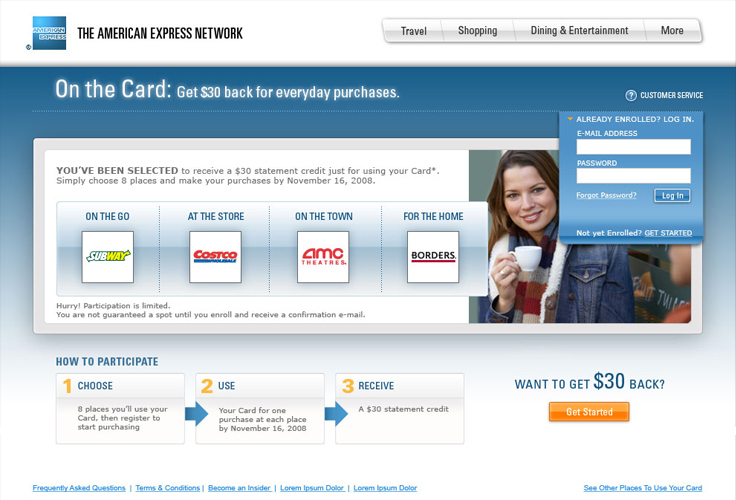
...as the number of products are very limited. Every item sells out. Another successful campaign I led was OnTheCard, a targeted promotion to incentivize spend in 'non-traditional' categories. Most loyal customers spend in travel and retail but don't use their cards at gas stations, grocery stores, pharmacies, etc. The promotion was designed as a game where customers register their card and then spent at 6 merchants (that they've chosen from a list) within a specific time-frame. If they used their card at all 6 merchants they received a $30 gift card. We saw a spectacular response rate, 46%. Of those participants, 86% continued to spend in the 'non-traditional' categories. This was, by far, the most successful, behavior changing promotion at American Express.
 NAVIGATE (7) SAMPLES
American Express OPEN
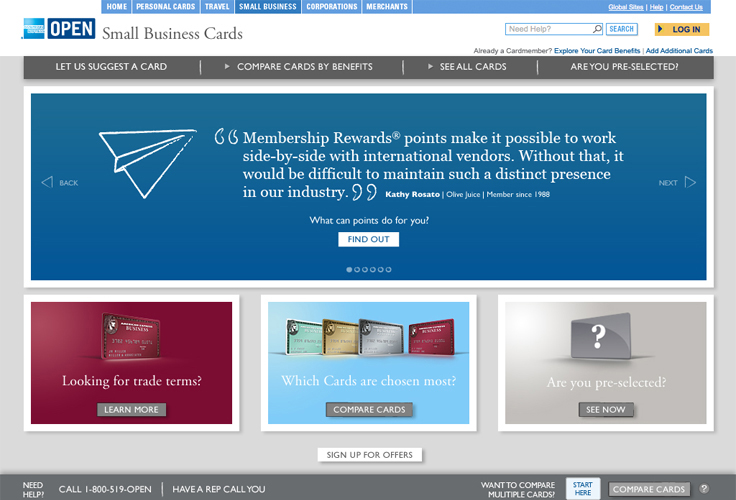
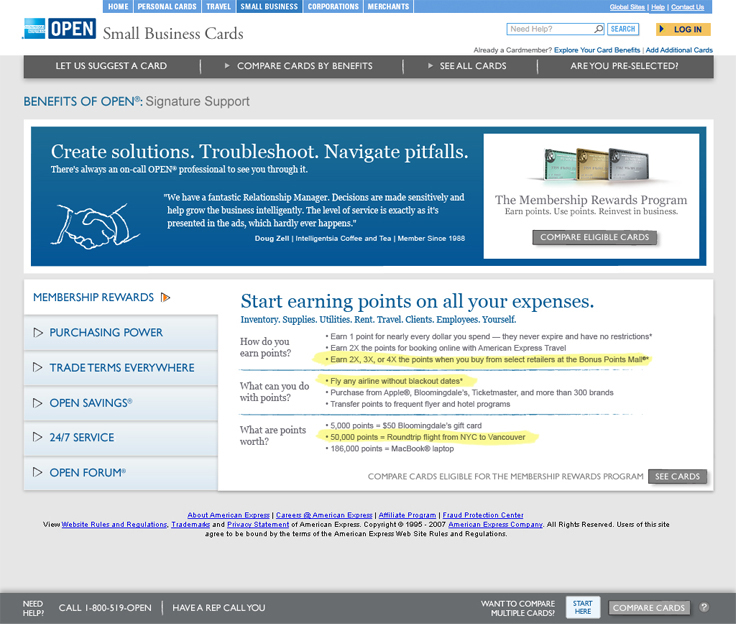
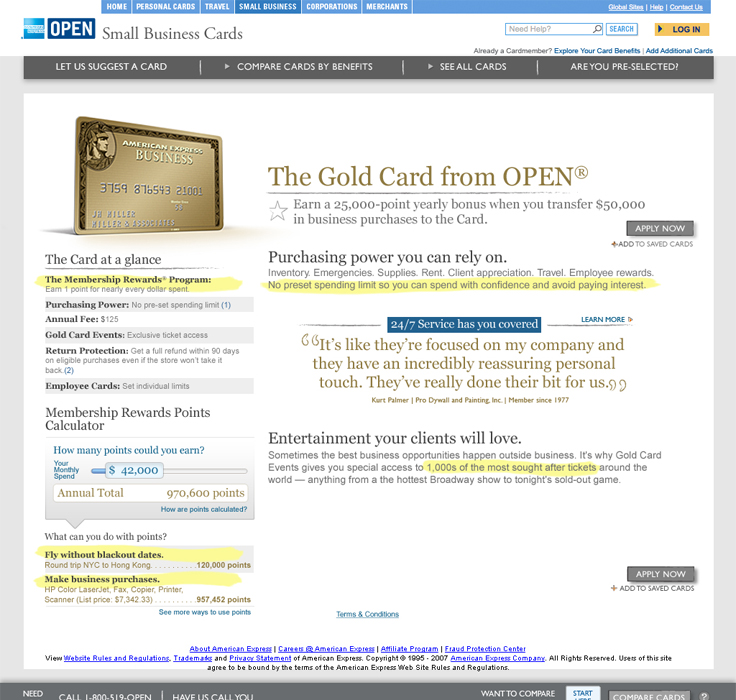
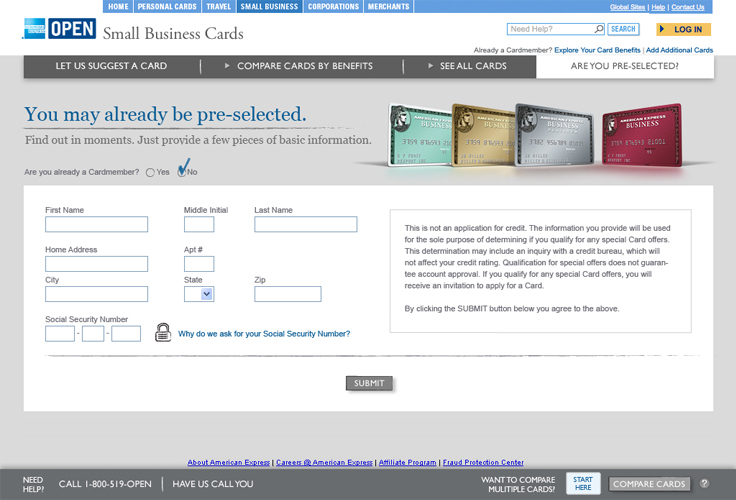
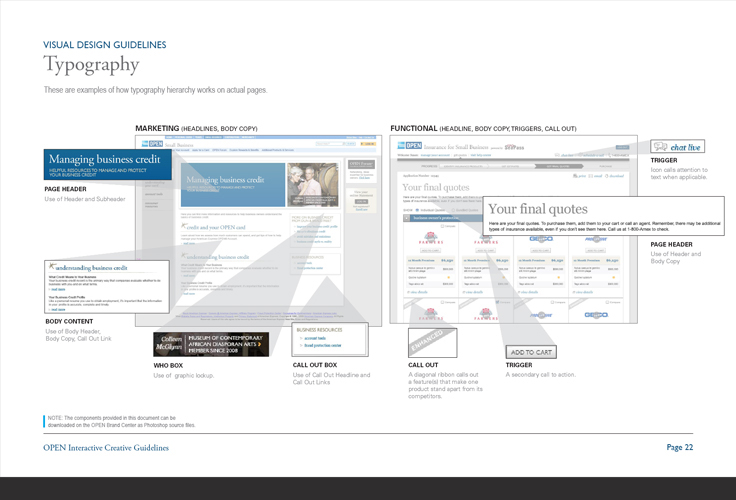
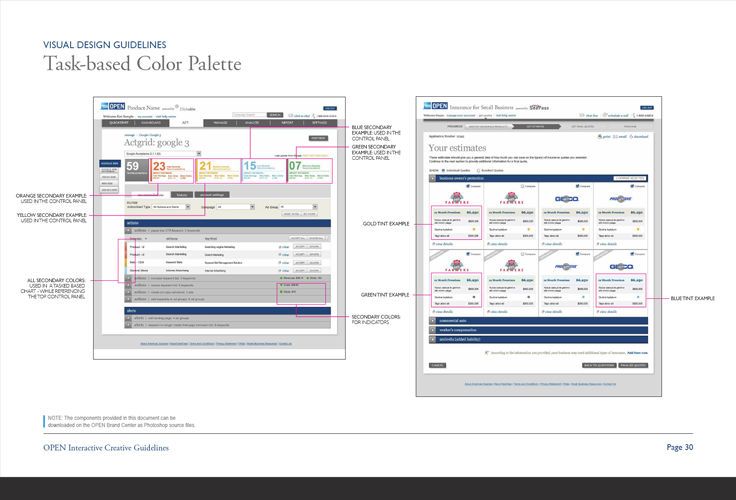
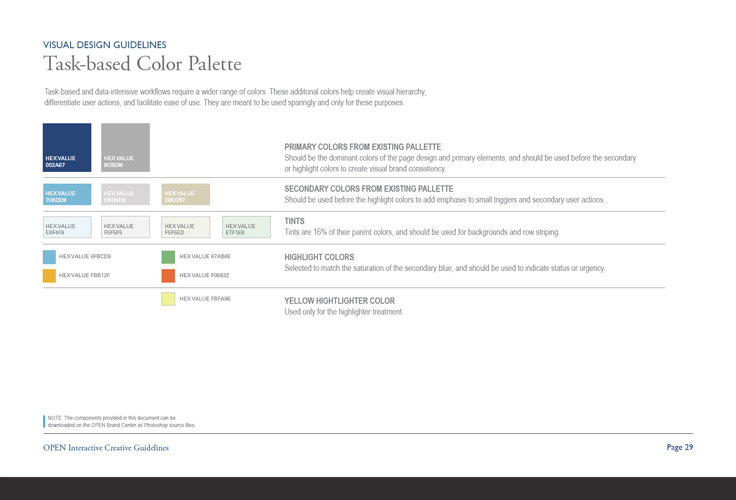
When I took over the OPEN business in 2009 it was undergoing a brand overhaul. The visual identity was incomplete and I was responsible for refining it and translating it for the online channel. The site itself was in various stages of completion and new client leadership was ready for significant, visible change. I lead my team through the massive project of creating new online brand guidelines and applying them to all current projects, simultaneously. Four major initiatives were beginning; the new strategy and re-design of the acquisition site; a new acquisition campaign; and two heavily transactional work-flow applications. I led three different teams to solve each individual project challenge and to keep all the visual elements and behavior consistent for each separate experience.
 NAVIGATE (6) SAMPLES
AXP Merchant Site
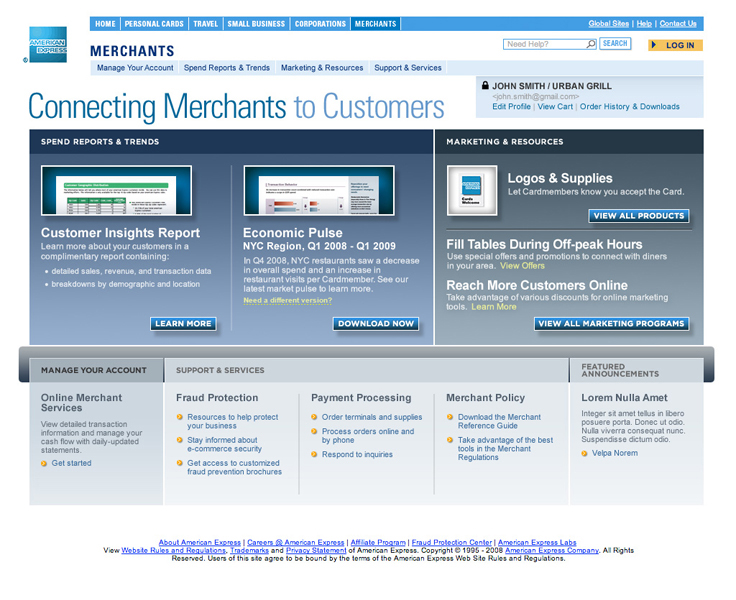
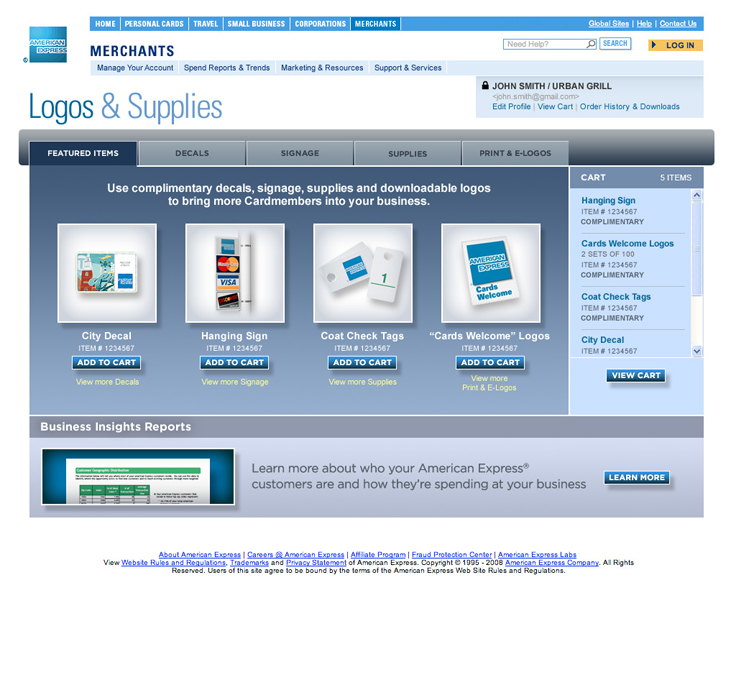
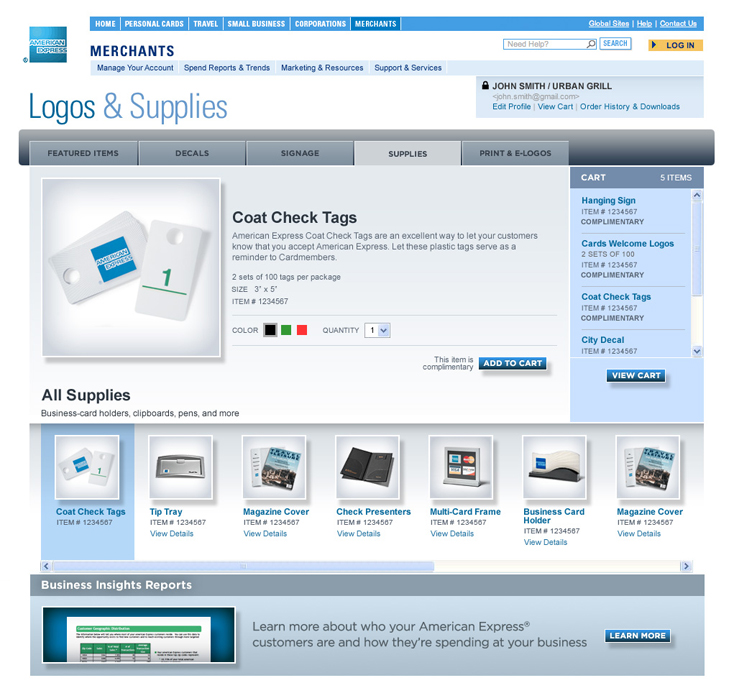
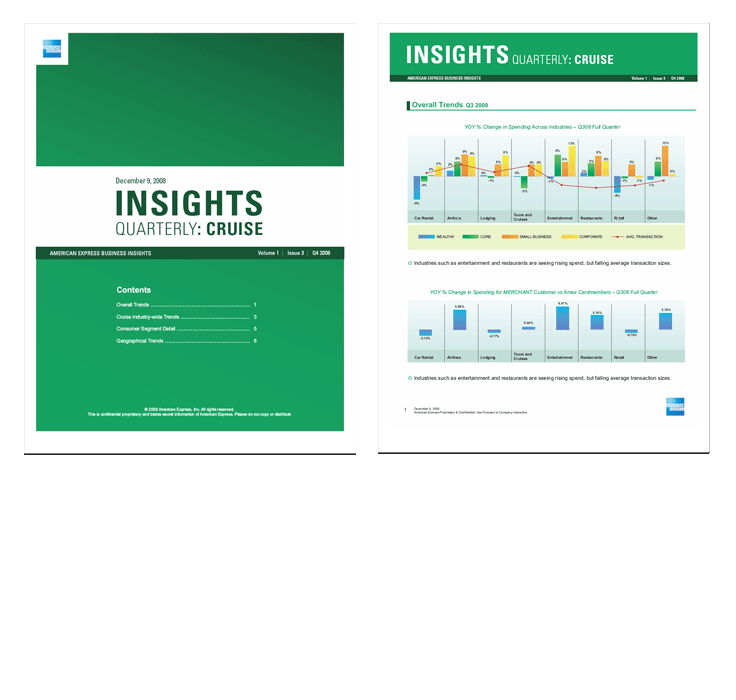
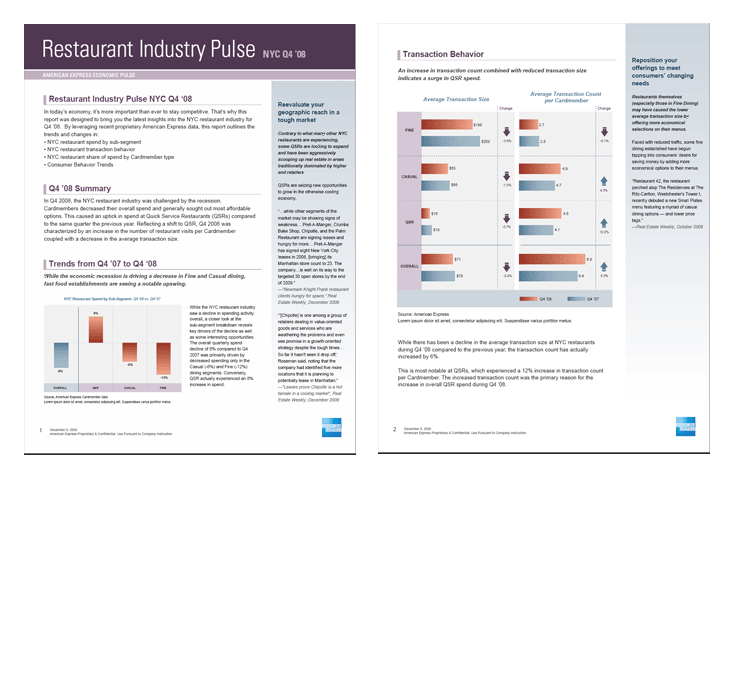
American Express wanted to create a product offering for their merchants from a vast collection of transactional data it had gathered from its closed loop network. As creative lead on this seemingly dry and complex project, my objective was to make something genuinely useful for merchants while making sure individual businesses didn't gain a competitive edge and all cardmember data stayed secure. Together with my team, we proposed an information solution for merchants that could be used in their day-to-day business, providing customized, relevant purchasing pattern and demographic information so merchants could adapt and change their marketing based on trends. We were responsible for designing the visualization and presentation of this data in a clear and useful manner. I led the creation of the new site experience, including the visual identity and an unusual e-commerce conceptual model that successfully combined the purchasing of real and virtual items.
 NAVIGATE (4) SAMPLES
Sophia Wallace
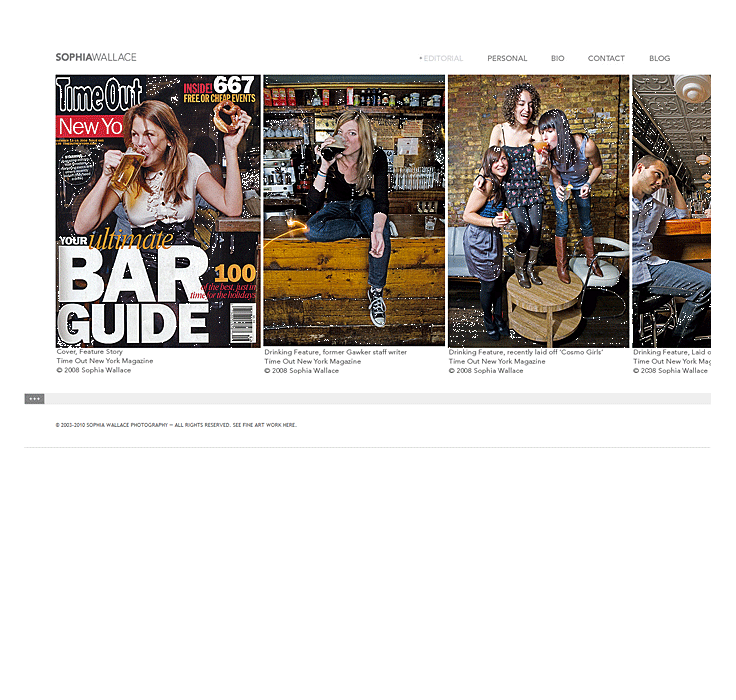
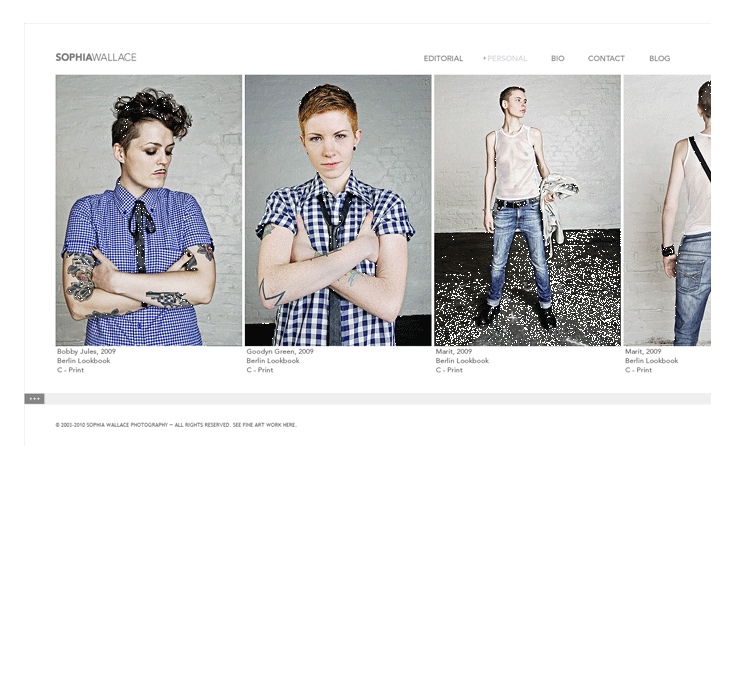
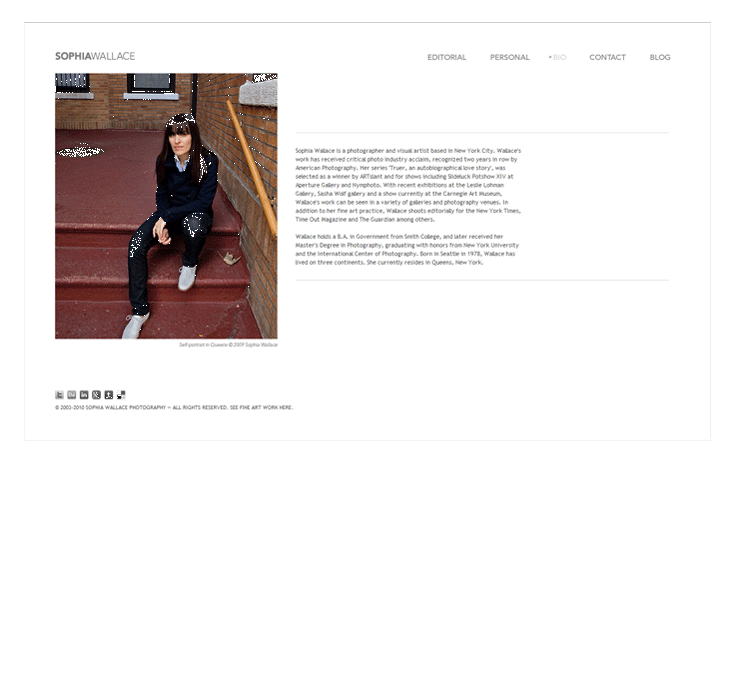
Sophia Wallace, an award winning photographer and visual artist based in New York City, needed a digital presence with a simple, clean interface. The goal was to create an online experience that allows the viewer to see Wallace's body of editorial work holistically and to differenciate this work from her fine art work. Each photograph is given equal importance and the viewer can casually browse the images at their own particular pace, similarly to a gallery or museum experience.
Wallace's work has received critical photo industry acclaim, recognized two years in row by American Photography. Her series 'Truer', was selected as a winner by ARTslant and for shows including Slideluck Potshow XIV at Aperture Gallery and Nymphoto. With recent exhibitions at the Leslie Lohman Gallery, Sasha Wolf Gallery and a show currently at the Carnegie Art Museum, Wallace's work can be seen in a variety of photography venues. In addition to her fine art practice, Wallace shoots editorially for the New York Times Styles and T Magazine, Time Out New York Magazine, The Guardian and Humanity in Action among others.

 NAVIGATE (2) SAMPLES
RightRides
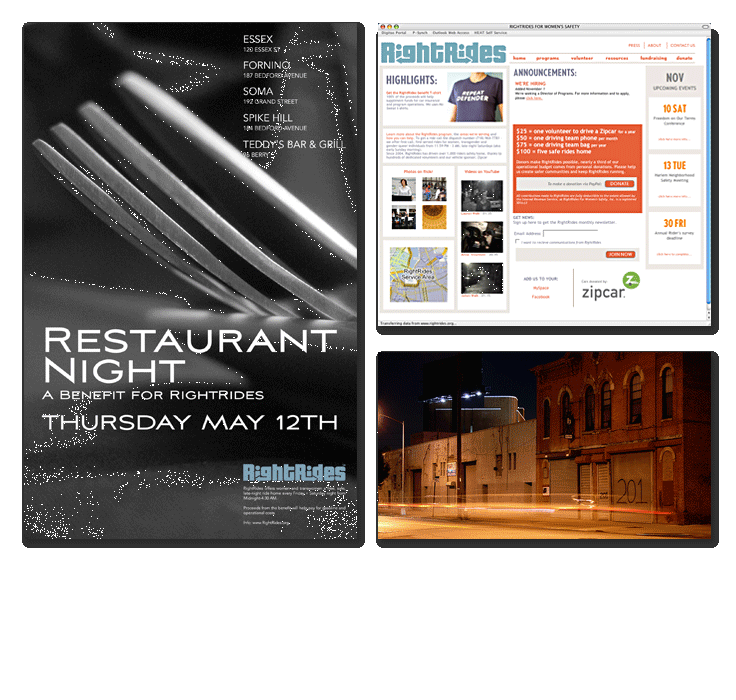
RightRides for Women's Safety, Inc. is a successful and celebrated grassroots non-profit that I co-founded in 2004. My business partner and I developed the operational model, and I developed the messaging (marketing, PR, media strategy) and brand. Since its inception RightRides has grown steadily at the rate of 400% every year. The service started in three New York City neighborhoods, now RightRides covers 45 neighborhoods across four boroughs. In 2010 RightRides plans to expand to San Francisco and Washington, DC. With my experience as an interactive creative director, I led a technology strategy initiative enabling RightRides to utilize mobile, social media and online marketing through all of its operations and communications. This focus has been critical to the success and continued viablity of RightRides. RightRides' mission is to build safer communities by ending gender-based harassment and sexual assault; by community organizing and offering direct...
(READ MORE)
...service, safety education and advocacy programs. The RightRides program, offers women, LGBTQ and gender nonconforming individuals a free, late-night ride home to ensure their safe commute to or through high-risk areas.

 NAVIGATE (2) SAMPLES
Center for Anti-Violence Education
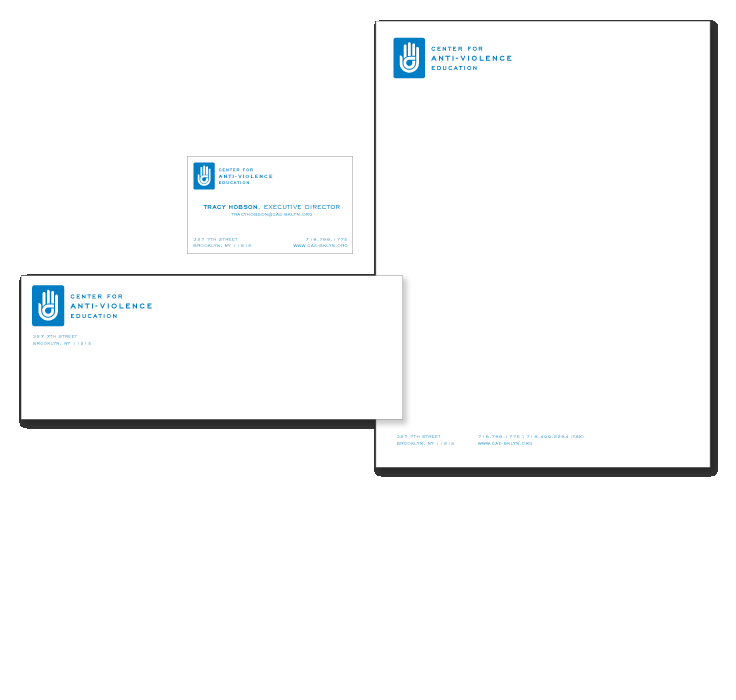
The new executive director of this 30 year old organization needed a new, modern and powerful visual identity that captured the empowerment and progressive approach. The Center for Anti-violence Education (CAE) works as a catalyst for change in the lives of women, transgender people, teen women, children, and other communities especially affected by violence. CAE’s programs are designed to develop participants’ skills, knowledge, and awareness to enable them to heal from, prevent, and counter violence. They do this work to actively create a peaceful, just, and equitable world.
 NAVIGATE (2) SAMPLES
project paperless
Industry leaders state that 44% of all junk mail is thrown in the trash, unopened and unread. It is estimated that each person in the US alone will have received almost 560 pieces of junk mail in 2009, which adds up to around 4.5 million tons of junk mail in one year alone. Added to this, around 40% of the solid waste now in landfills is paper and paperboard waste. Experts predict that this figure will reach 48% this year (2010).1
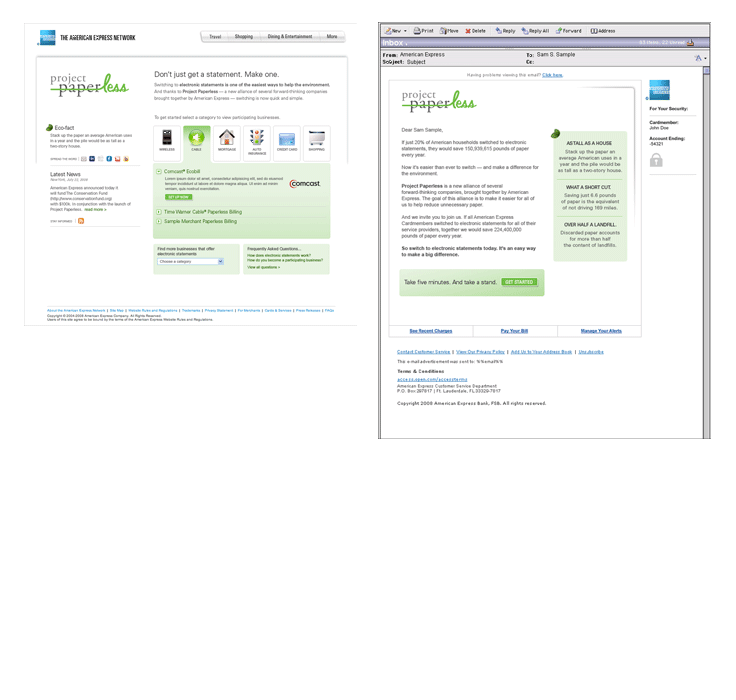
Our idea for Project Paperless was to start a coalition of corporate organizations, led by American Express, that promised to cut paper waste and consumption by 50% over the next 10 years. The first step was to transition 60% of their customers from paper statements to e-statements. The email addresses collected from that initiative would be used to move all direct mail going to those customers to online channels. Lastly, each company would work to reduce all office paper waste by holding employee competitions, publicly, through social media outlets.

TMW Tile
This ten-year-old, successful small business needed a new identity to distinguish itself from the competition. The client wanted his logo to reflect the modern aesthetics that were favored by most of his customers, as well as communicating the geometry and pattern language that's fundamental to tasteful tile installation. The resulting logo will be utilized in all of his digital and online collateral.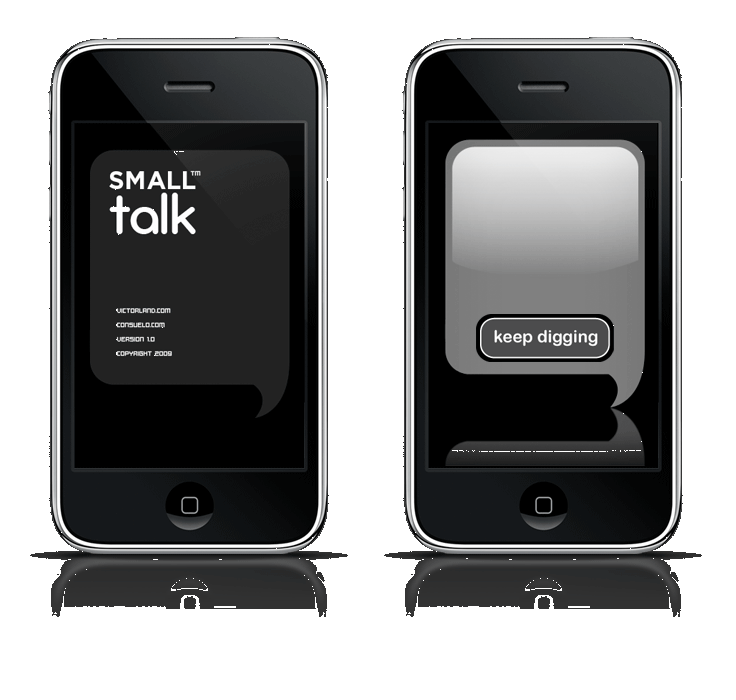
SmallTalk
(in development)Research shows that a group of strangers will talk for about 7 minutes before they all fall silent. You know the kind of uncomfortable silence I'm talking about, right? I created SmallTalk® as a party game to keep the dialog going; at parties, on blind dates and to avoid having real conversations with your parents. With the help of @VictorBrilon, questions of various nature are randomly generated to pull intriguing information out of you and your cohorts. Questions were gathered from various sources, written by friends and me.
Go ahead and test out some questions by clicking on the "keep digging" button on the iPhone:
It's about user experience
I'm formally trained as a traditional art director, with over 15 years of interaction and usability design experience. I've been illustrating, designing and inventing for as long as I can remember; my first project was a logo for a neighborhood landscaping business when I was 12.Design and aesthetics are my passion and creative problem solving my favorite challenge. I've worked in interactive business strategy, interactive marketing and traditional direct marketing with a highly successful track record in all three. For the last 10 years, I've been working on a global financial brand, focusing on design challenges that range from complex web applications (that were more like software builds than site experiences) to online campaigns, including rich media banners and marketing microsites, promotions disguised as online auctions and the creation of an online bank.
I believe creative leaders should have a vision in mind and the ability to lead a team from the beginning of that vision to the absolute pixel optimizing end. They should know when to delegate the work and when to own it. When to defend the work and when to let it go. I believe that creating interactive experiences that deliver value to customers and generate results for companies is far more substantive than winning awards. I love working on large, complicated builds with a diverse group of team members. I get a deep satisfaction from mentoring designers and pushing talented people to do better than their best.
I'm looking for a company that is seeking the best creative minds; for full-time, contract or consulting work. Contact me: consuelo (at) consuelo (dot) com.